Built like a real product, not a weekend controller
AGS is designed as a dedicated grow-room appliance: stable on the shelf, clear in the app, and ready for the routines small rooms actually repeat.
AGS gives small indoor growers one serious system for the daily room check, the equipment routine, the plant record, and the memory of the run. The experience is commercial-grade, steady, and simple to return to every day.
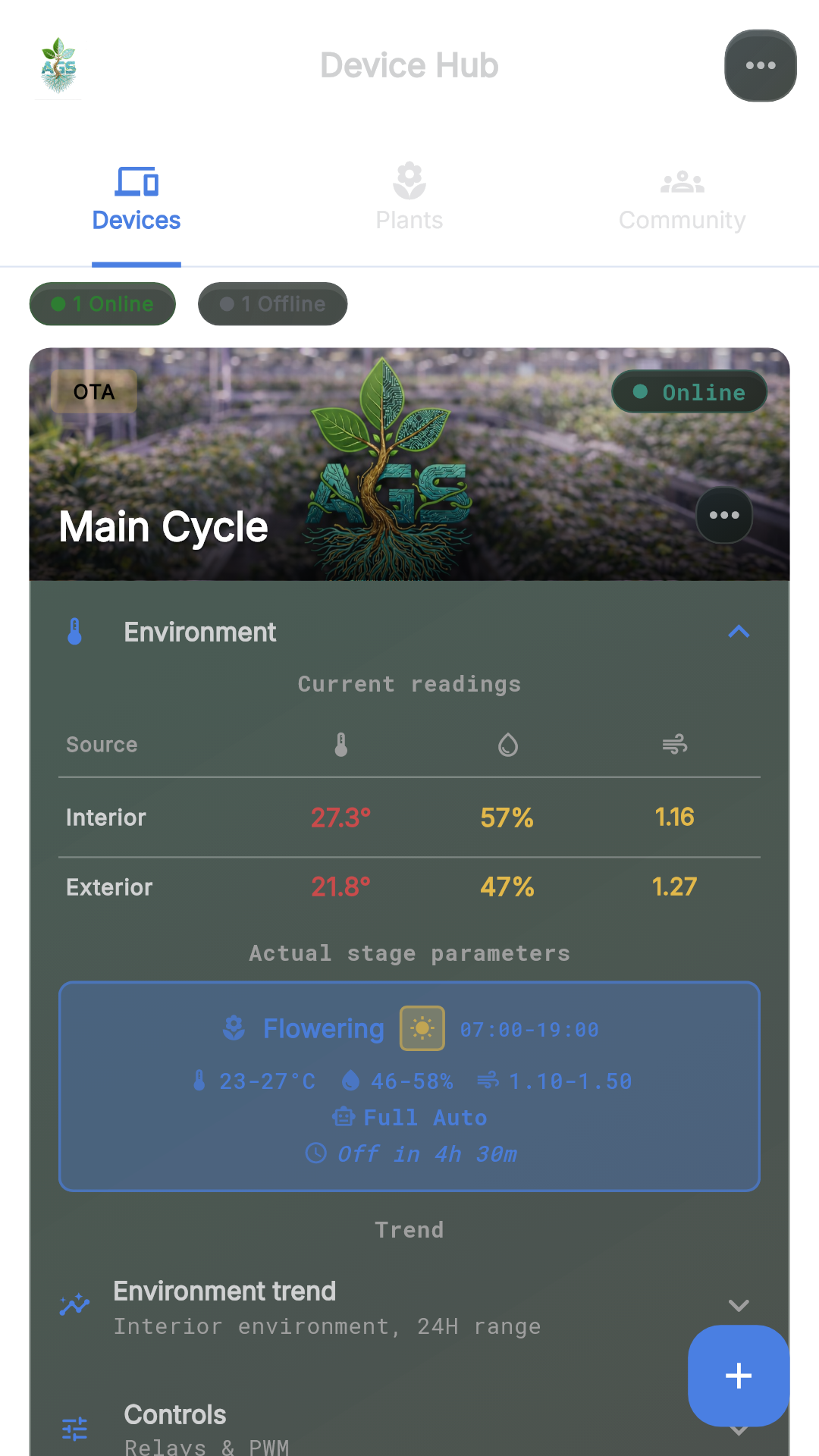
The product story is simple: plug in the appliance, check the room, follow the plant, review the week, and keep the harvest as part of the next run.
One probe sits at canopy level and one outside the tent. AGS compares both before it adjusts the room.
Schedules, PWM outputs, Matter plugs, IR commands, and device history stay anchored at the hub.
Commission Wi-Fi Matter plugs for mains loads and keep them on the same schedule surface.
Lights, fans, humidifiers, and AC remotes share status, control, and history in one place.
Plant notes, photos, weekly reports, and configuration history stay beside live telemetry.
AGS is an appliance first: high-grade room control, a calm app, and a grow record that stays useful long after the run closes.
AGS is designed as a dedicated grow-room appliance: stable on the shelf, clear in the app, and ready for the routines small rooms actually repeat.
Live room state, equipment status, plant context, and recent changes sit together so the daily check stops feeling like a tour through separate tools.
Stages, notes, photos, weekly reviews, and harvest details live beside the room history, so the next run starts with memory instead of guesswork.
Setup is deliberate: connect the appliance, put it in the room, and use the app as the daily place for the grow.
The room check is simple: what is running, what needs attention, what the plant is doing, and what changed since the last look.
When the cycle closes, the plant record, weekly notes, and harvest details remain useful instead of disappearing into chat messages and spreadsheets.
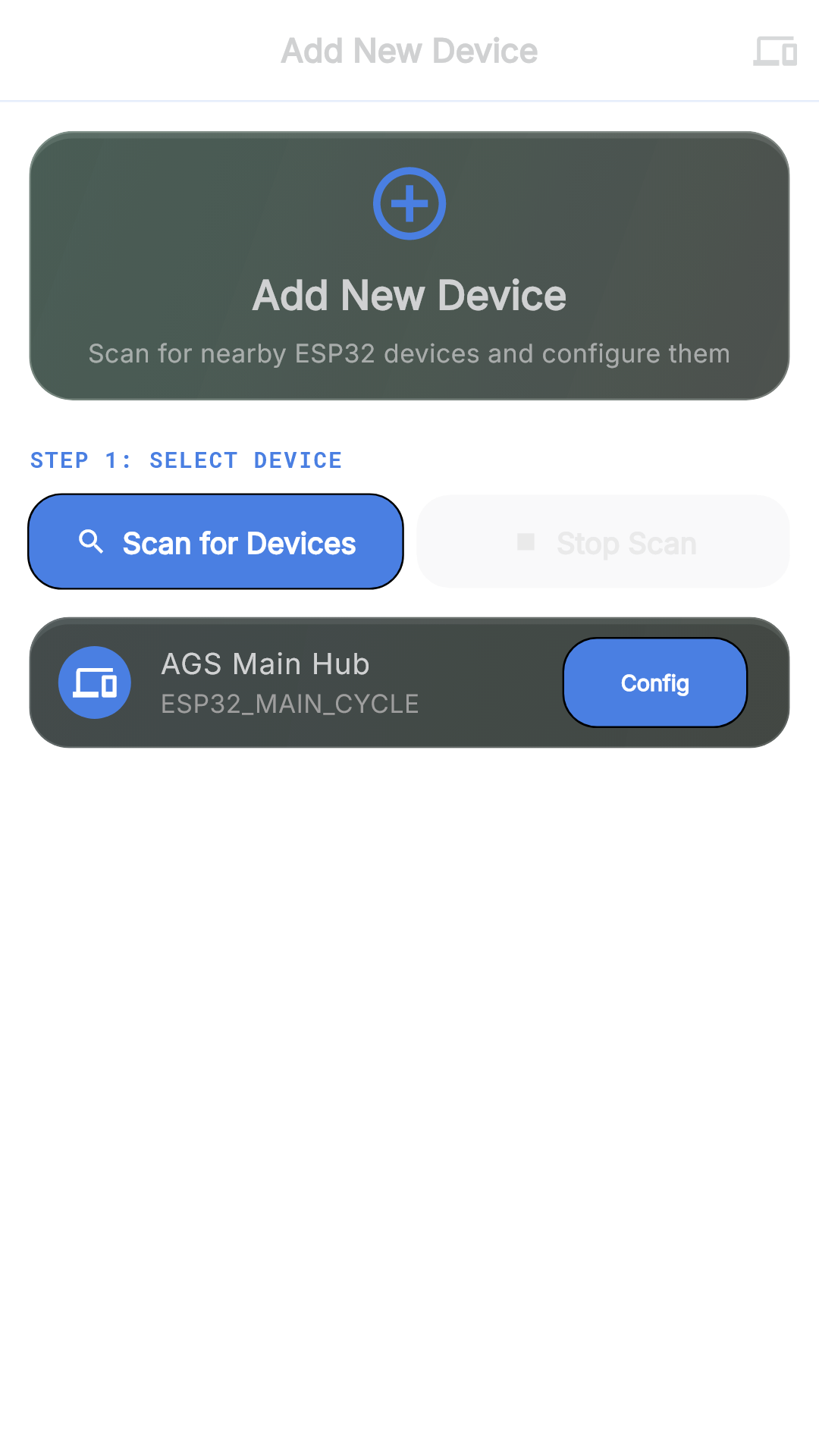
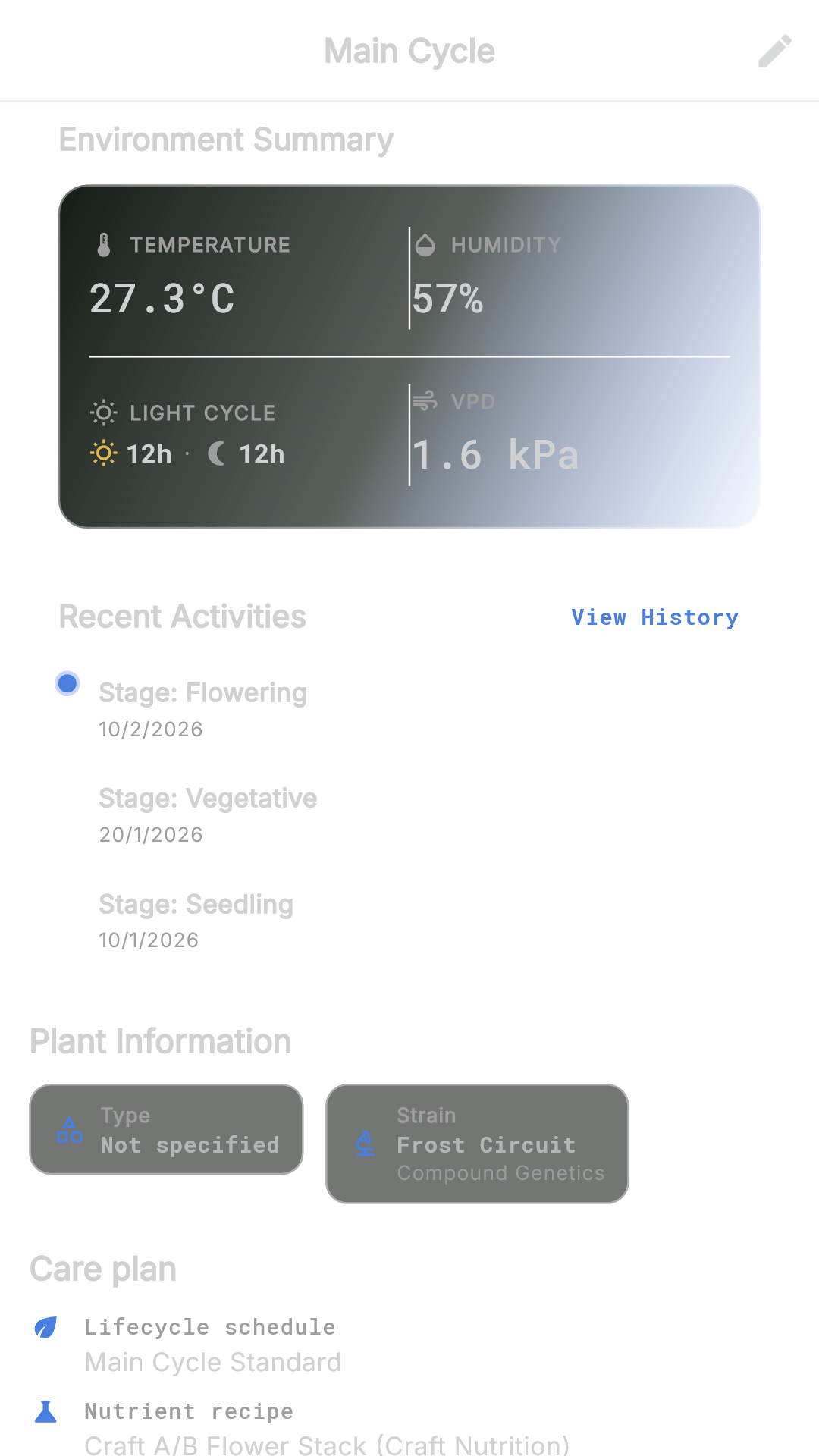
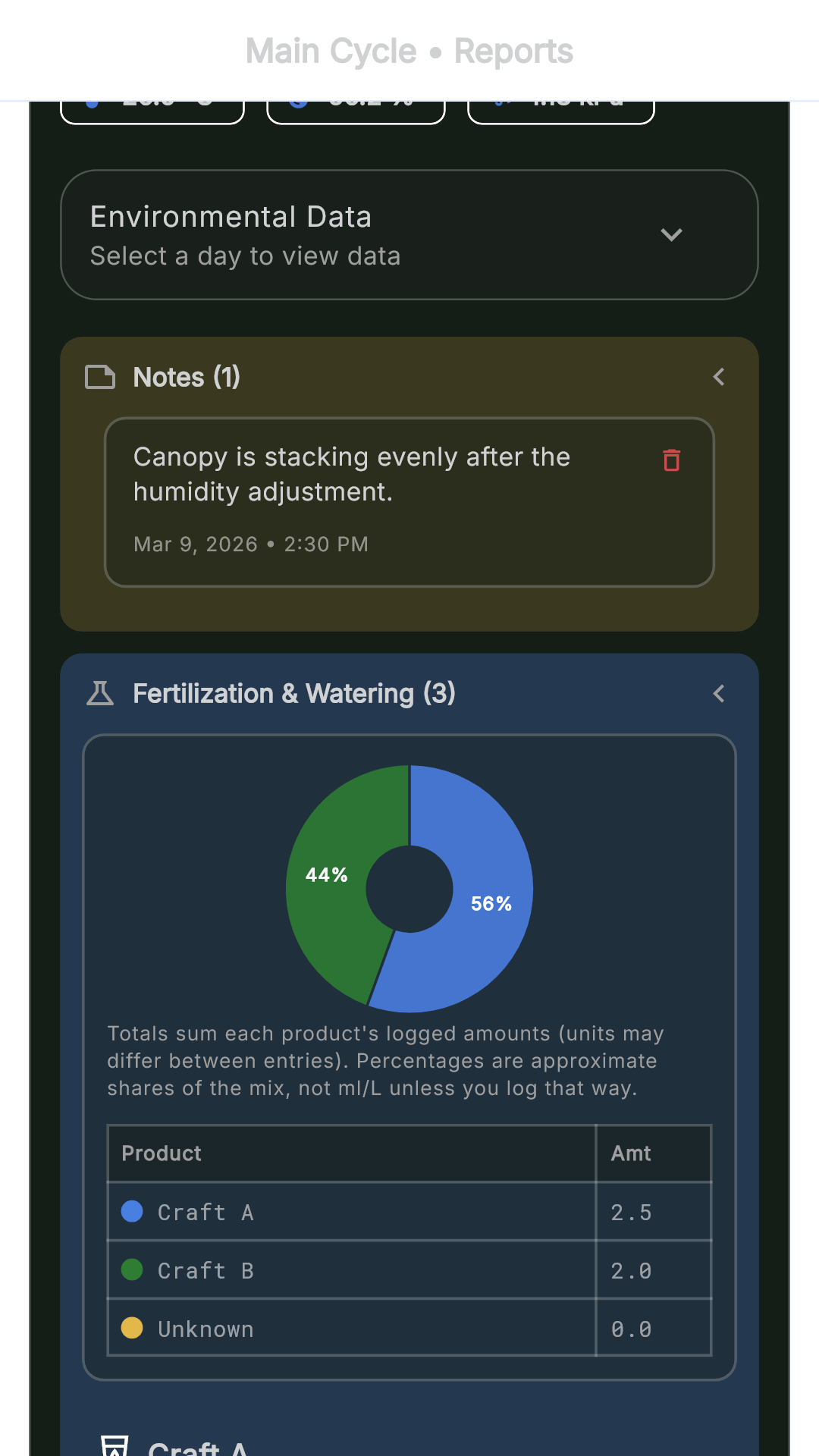
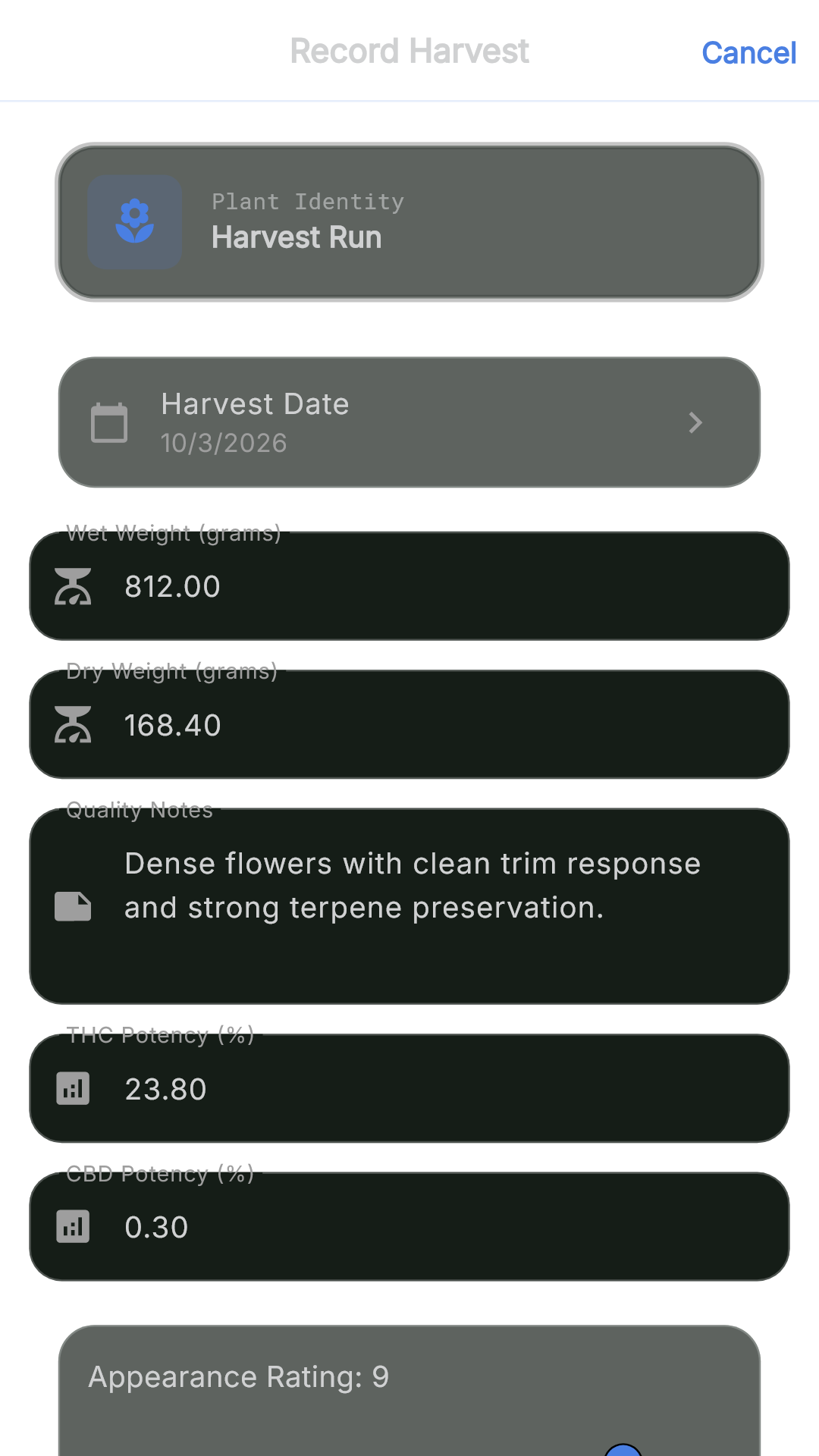
Reports, plants, and configuration each have a focused page, so buyers can see real app depth without turning the homepage into a manual.
Reports combine room averages, notes, feeding and watering, actions, setup snapshots, and photos into one readable grow week.
The record follows the plant through stage, care plan, environment, timeline, weekly reviews, and harvest details so the grower can return to the story later.
Configuration remains available for setup and support, while the main product story stays focused on operating confidence.
Single-probe sensor pods log nice charts but cannot switch a plug, dim a light, or trigger your mini-split. AGS reads, decides, and acts in one appliance.
Controllers from a fan brand only control that fan brand. AGS pairs any Matter Wi-Fi plug and any IR appliance with a remote. You are not locked into one vendor.
Professional grow controllers are built for multi-rack commercial rooms with dedicated HVAC. AGS is sized, priced, and designed for a 1.2 m tent in a spare room.
Compare SaaS limits on Pricing, then reserve hardware while CE production finishes.